
Fluid catalytic cracking unit on the US Gulf Coast.
On a 50-inch FCCU reactor overhead line, multilayer ceramic / cal-sil / mineral wool had been damaged by heat, vibration, and weather — driving cold spots that risked coke formation and a multi-million-dollar plant outage.
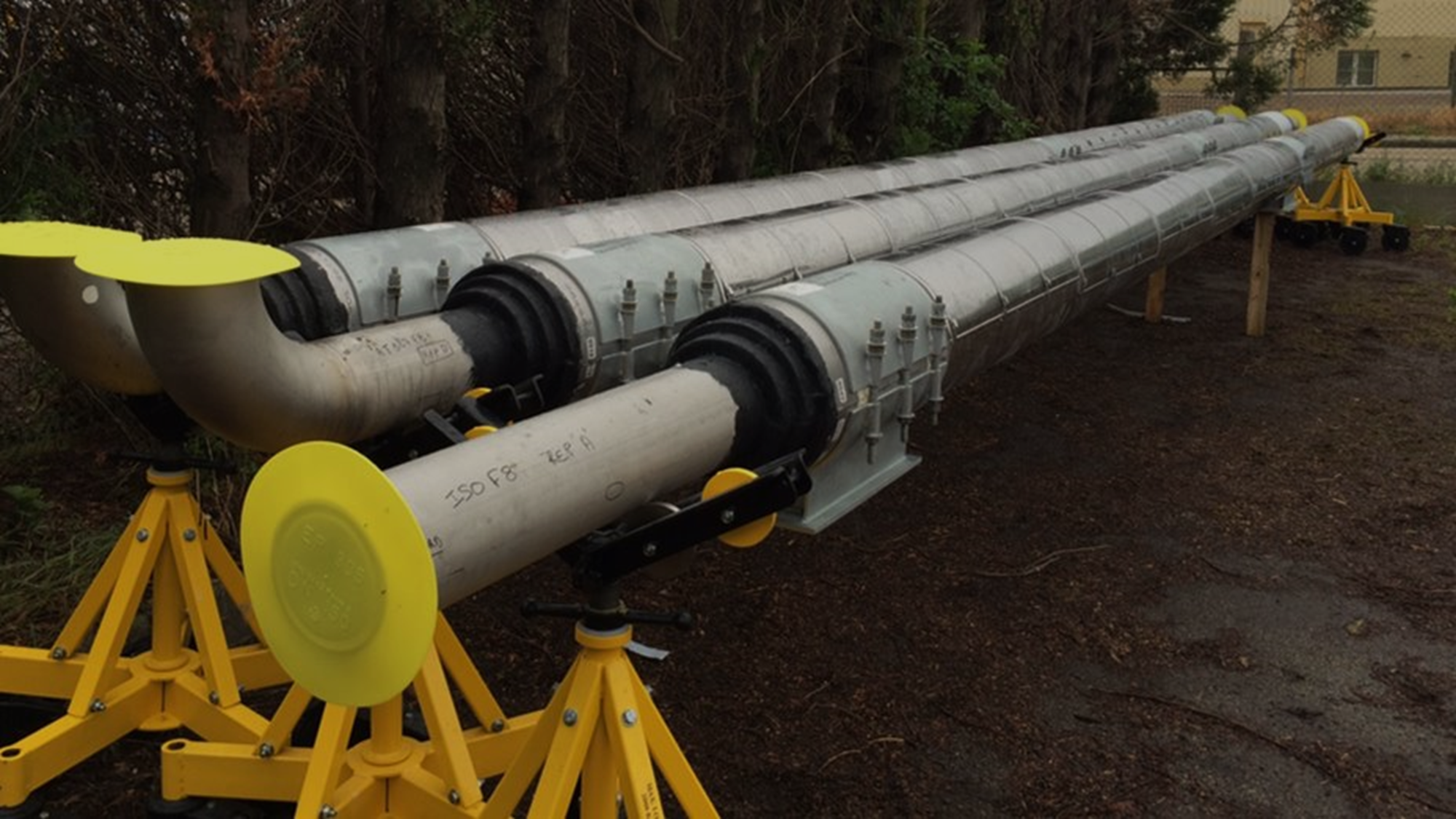
Damaged insulation, cold spots, and FCCU shutdown risk.
Wet and damaged multilayer insulation created cold spots on the 900 °F overhead line — premature coking starts there.
- Wet conditions and damaged insulation. Multilayer system suffered from heat and vibration.
- Cold spots drive premature coking. Coke formation in the line risks blockage and shutdown.
- FCCU shutdown costs $M/day. Larger plant outages can cost upwards of millions of dollars per day.
Pyrogel® restores thermal performance across the line.
Pyrogel® was specified to restore continuous thermal performance and remove the cold-spot mechanism that drives coking on FCCU overhead lines.
- Pyrogel® restored thermal performance. Continuous insulation eliminates the dead-spot mechanism.
- Maintained optimum operating conditions. Across the temperature and vibration profile of the line.
- Avoided blockage and shutdown. Each avoided outage represents millions of dollars of capture.
- No dead spots, including flanges. Coke grows wherever a cold spot exists — flanges included.
Significant cost savings by avoiding the catastrophic-failure case.
Pyrogel® value on FCCU overhead lines is best measured by what it prevents — the catastrophic case of plugged overhead lines requiring an FCCU shutdown. By eliminating cold spots and damaged-insulation entry points, Pyrogel® materially reduces the probability of that scenario.
FCCU overhead at risk of coking?
Pyrogel® delivers continuous, durable thermal performance — Aspen can review your line condition and risk profile.